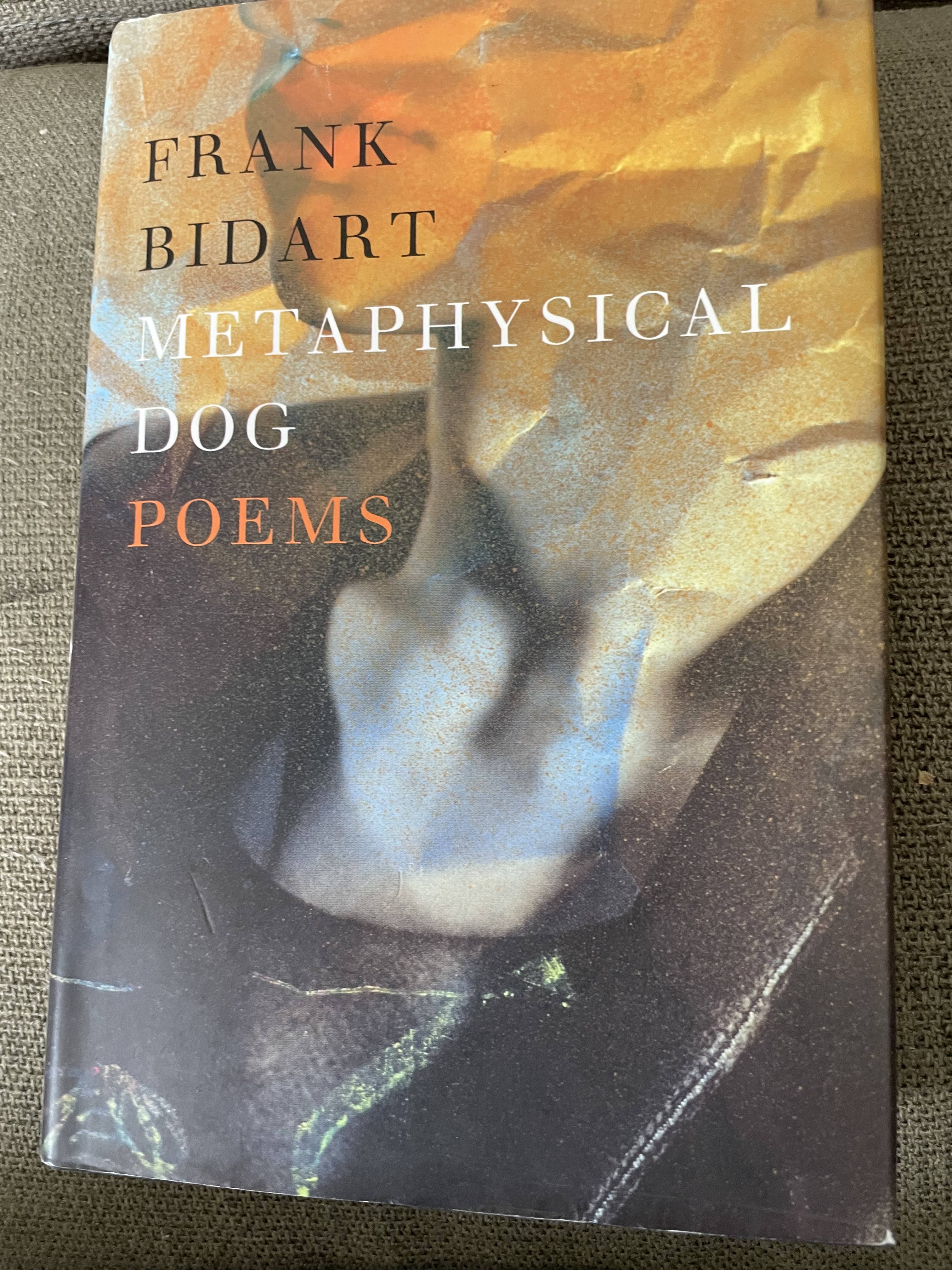
(Farrar, Straus and Giroux, 2013)
I chose to reread Bidart’s eighth collection (if you include the first collected and also Music Like Dirt) because it’s my favourite, I think. It embodies his history, aesthetics and high modernism in a way that gives the reader reassurance somehow about existential doom and human tragedy. Bidart is a poet with a deep sense of original sin and an equal distrust about the dogmas of faith that formed his much younger self. His work expresses deep emotion and serious intellectual concerns. He also provides a body of work that explores and represents gay experience and struggle.
It’s enough to reread a Bidart collection without trying to write a commentary or response to it in the same day. What I would like to do is convince British readers to read his work.
He is one of the last great high modernist American poets. He was mentored by (and supported) both Robert Lowell and Elizabeth Bishop as a young poet. He writes about embodiment, intellect, soul, hunger, sex, sin, the loss of God, history, madness, America and psychological filial inheritance like no one else. His poetry is how he lives.
Seduced not by a book but by the idea
of a book

like the Summa in five fat volumes, that your priest

in high school explained Thomas Aquinas
almost finished, except that there were,

maddeningly, "just a few things he didn't

have time, before dying, quite
to figure out"

...         [from 'Dream of the Book' p.47]
Watched this recent film of Bidart’s interview with Garth Greenwell to learn more about his work: https://www.youtube.com/watch?v=vDpwi4n2hdc

 Burning Bright
Leave a comment